Using wet silage to control the silage clamp face
In a recent article I looked at silage clamp feed face progression and the goal of preserving the forage quality once the clamp has been opened. One of the factors that has a big influence on this is the dry matter of the forage that goes into the clamp. This is because a drier silage is more permeable to gas exchange leading to the aerobic losses from microbial activity often seen as heating of the silage.
Whilst standing in front of some, let’s say, “sub optimal” grass silage I realised that I had missed a vital point in that article - wet grass silage can be really good at sealing the face when it’s smeared by a shear grab. So should we consider utilising this in some way?
Is wet grass silage good for summer feeding?
Well that’s not a completely crazy idea because one of the big problems with feeding silage in the summer is controlling the feed face. Losses of nutrients on the silage face are due to microbial activity and these microbes are much more active in warmer temperature. Wet silage is much, much less gas permeable than dry stuff and therefore suffers less losses as the ambient temperature rises. So this leads me to question if it’s really worth battling to preserve dry silage in the pit or would it just be better to make some wet silage and feed it during the warmer summer period?
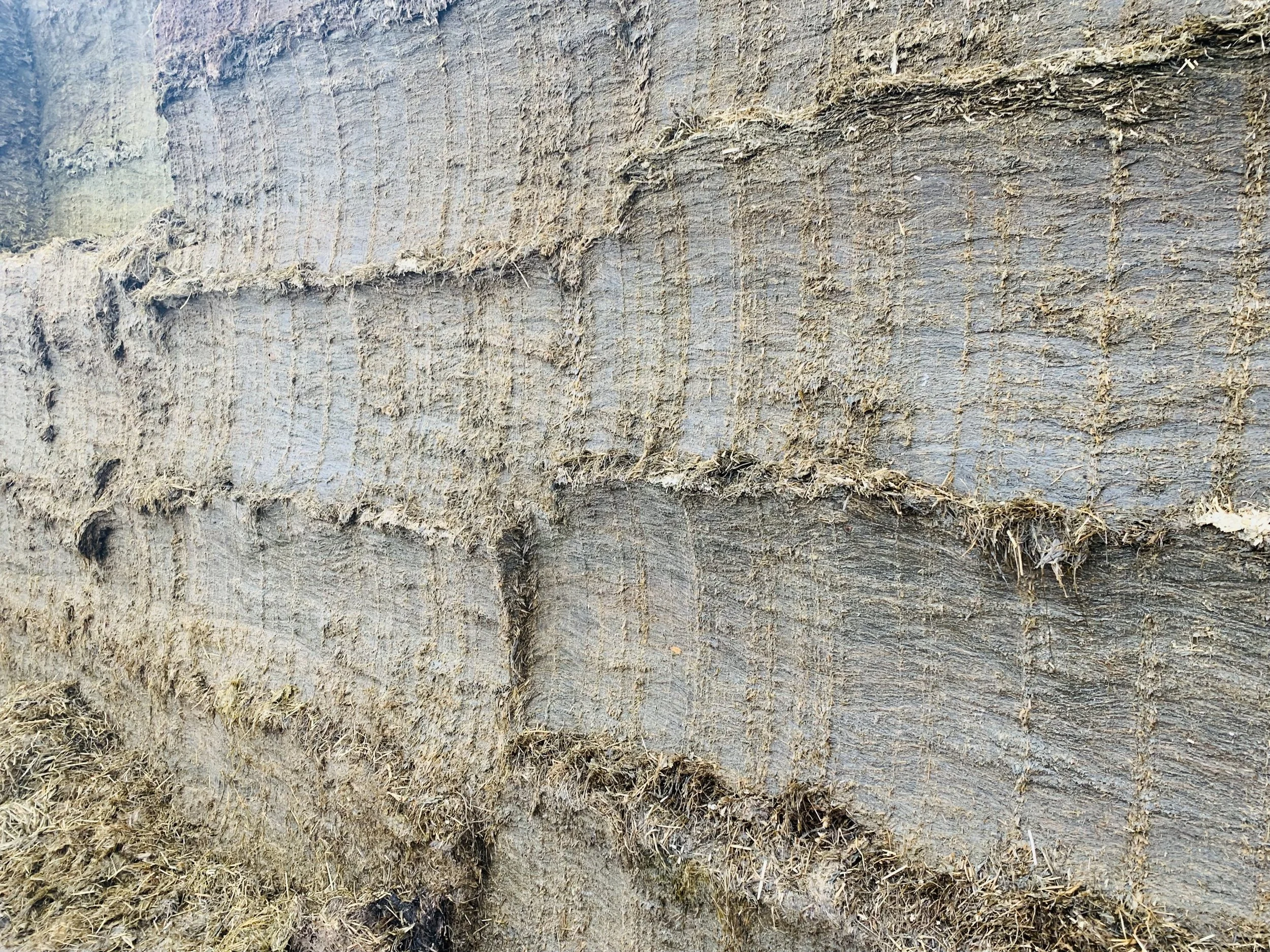
Lower DM silage can be less gas permeable
What’s the problem with wet silage?
You might have read some stuff about wet silage elsewhere onboard this website because there are lots of problems with wet silage. But let’s just consider that there might be some benefits too, particularly in those hot months when you’re trying to feed a hungry herd or a demanding digester. So let’s just concentrate on the positive for a moment and concentrate on energy because this is the most vulnerable feed component.
Wet silage will lose less once your feeding it out, but it will have used some extra energy when it was fermenting. This is due to the buffering effect of the higher moisture levels; it’s a complex relationship that is influenced by the protein levels of the forage but that’s for another time. For now let’s just accept that wet silage will have a lower pH and will have used most, or all, of the available sugars to produce this acid. This will produce a silage with a lower ME per kg DM than an optimal silage.
How much energy does silage lose in the clamp?
The forage loses energy during fermentation and during feed out so what’s worst? Well ultimately we are really all just trying to harvest and store energy by making silage, so we need to compare the energy balance between dry and wet silage fed during the summer. Let’s assume you have a first cut grass crop that’s ready to harvest and you’re feeding year round. You could cut and wilt with a 30% dry matter target as normal or, if you are planning to feed it in the summer, should you just mow and row?
My kids almost certainly won’t be reading this but if they do they will predict the next phrase - we’re going to need a spreadsheet! To answer the question I firmly believe we need to dig into the numbers. I have assumed you are cutting 100 acres (40Ha) with a fresh yield of 10t/acre at 24% DM. I have also assumed that the protein, fibre and ash contents are all the same and that the crop would be tedded to achieve a 30% DM in 24 hrs.
How much does lost silage energy cost?
In order to put some costs to this (because that’s what really matters anyway) I have looked that the harvesting costs. All the other costs such as fertilisers, rents, overheads etc will be the same whatever dry matter you choose. But the tonnes you have in the clamp will be different because in 30% DM silage you have left around 60 tonnes in the field as water. Well not in the field, in the atmosphere really, but to properly compare these options this needs to be included.
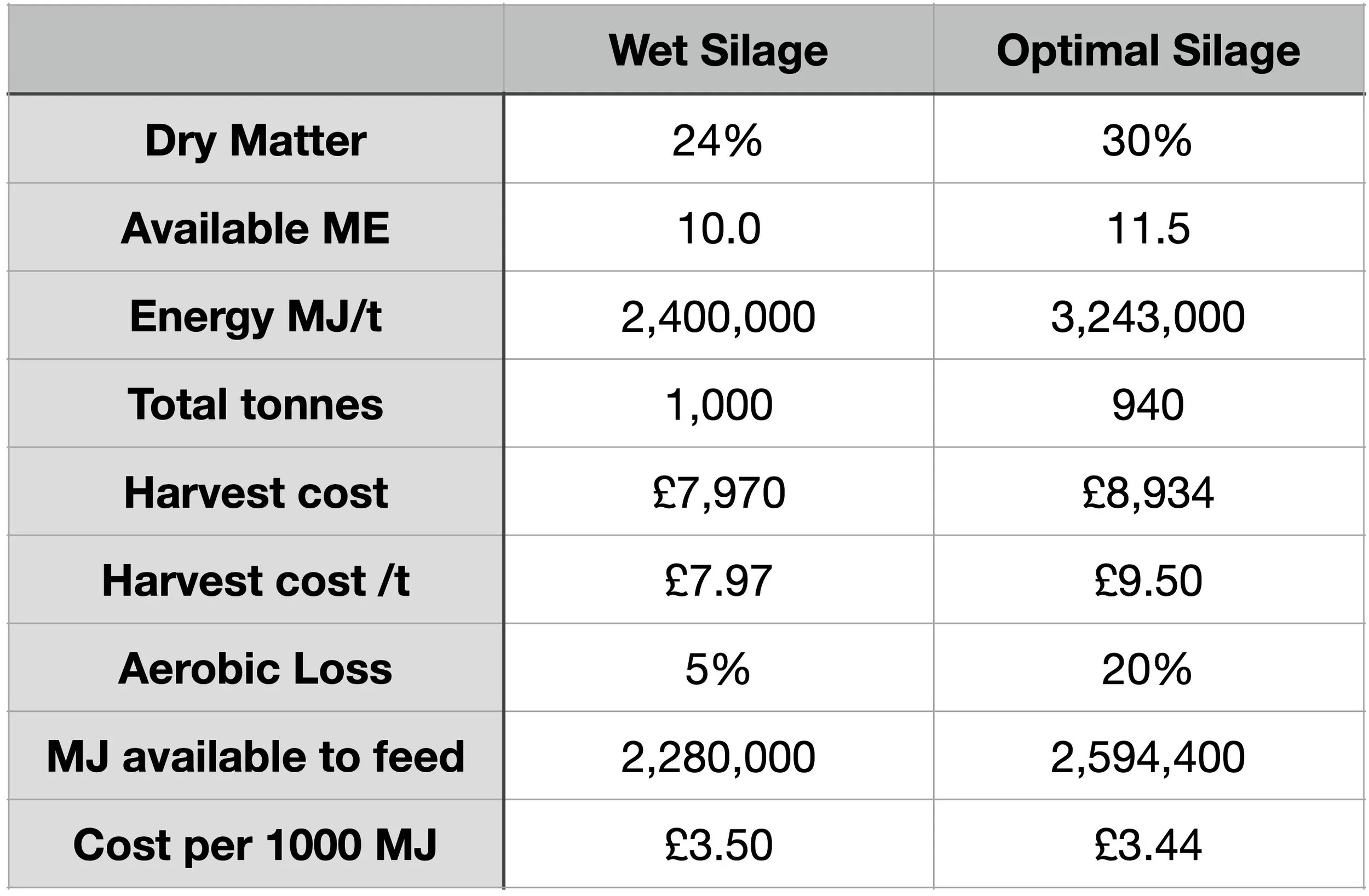
You will probably read these numbers and wonder what all the fuss is about, because there isn’t that much difference in the cost of each Mega Joule of energy between the two columns. Well there isn’t a huge difference (1.7%) but this is in a model where the losses have been loaded to favour the wet option. What does that really mean? Well I have assumed you didn’t really do anything to mitigate the losses in the clamp such as shorter chop lengths, additional compaction etc etc.
If the losses drop from 20% to 15% then the costs are around 8% lower for drier silage - but that’s not the whole story because wet silage has some additional issues that I have so far been ignoring. Wet silage is less palatable and intakes will be lower than an optimal silage. This means you will probably have to include some more expensive energy source in the diet to meet the target production level. Either that, or accept a lower output level, so less milk, less gas yield, or lower growth rates.
The problems don’t end there either because if you’re feeding livestock you need to consider the acid load of the diet and how to manage the pH in the rumen. Oh and don’t forget the effect on proteins, and then there is the problem of increased effluent production and all the problems that brings with it.
Ultimately if you make wet silage you suffer more losses during fermentation, but if you feed dry silage in hot weather you suffer higher aerobic losses on the clamp face. Still it’s (probably) a cheaper to supply energy from dry silage than from the wet stuff. So maybe planning to make wet silage is not the answer but sometimes it’s just not possible to avoid it.
What can I do with wet silage?
Well if, despite your very best efforts, the weather gods just won’t play ball and the silage is just going to have to be wet, then don’t despair. If you’re feeding year around, save the wet stuff for the hottest feed periods. It will need careful management and probably some change in your diet formulation but it won’t be wasted. If nothing else you can think of it like this - feeding wet silage in hot weather saves your good stuff for another day!
If you want to discuss planning your silage usage or would like to discuss any other aspects covered in this series, contact me at jeremy@silageconsultant.co.uk