How to take silage samples
If you sample your silage for analysis, then the biggest factor that dictates the accuracy of the results you get back is not the lab you choose, nor the method that’s used or even the equipment. No, the biggest factor that influences the accuracy of your silage analysis is how the sample is taken and how it’s treated right up to it being analysed. So whilst there is loads of advice on how to collect and mix a silage sample, there is little attention on how to “protect” the sample until it’s tested.
Is it worth testing silage?
I guess your view on testing depends on what you’re going to do with the silage. If you’re feeding dairy cows aiming for 12,000 litres average yields, then you are certainly going to need to know what they are eating. On the other hand, if your aim is just to keep some condition on the sheep during the darkest days of winter, maybe it’s not so critical? And if you’re somewhere between the two, or just fuelling a hungry digester then you will have your own opinion. For the record, I’m an analysis fan, I want to see the data.
The costs aren’t really prohibitive, it’s around £50 in the UK at the time of writing this, and that’s if you actually pay for it because loads of feed compounders will do it for “free”. But is it really free, I don’t know because I’m an old cynic…
How to collect a silage sample for analysis
So if you are going to collect your own sample, or if you’re letting someone else collect it for you, then it’s vital to know how it should be done. I try to plan what I’m going to do before I start stuffing silage into a bag. So that means looking at the silage face and making an imaginary map of where each sample is going to come from. Around 10 individual points is a good target, obviously a mix of top, middle and bottom.
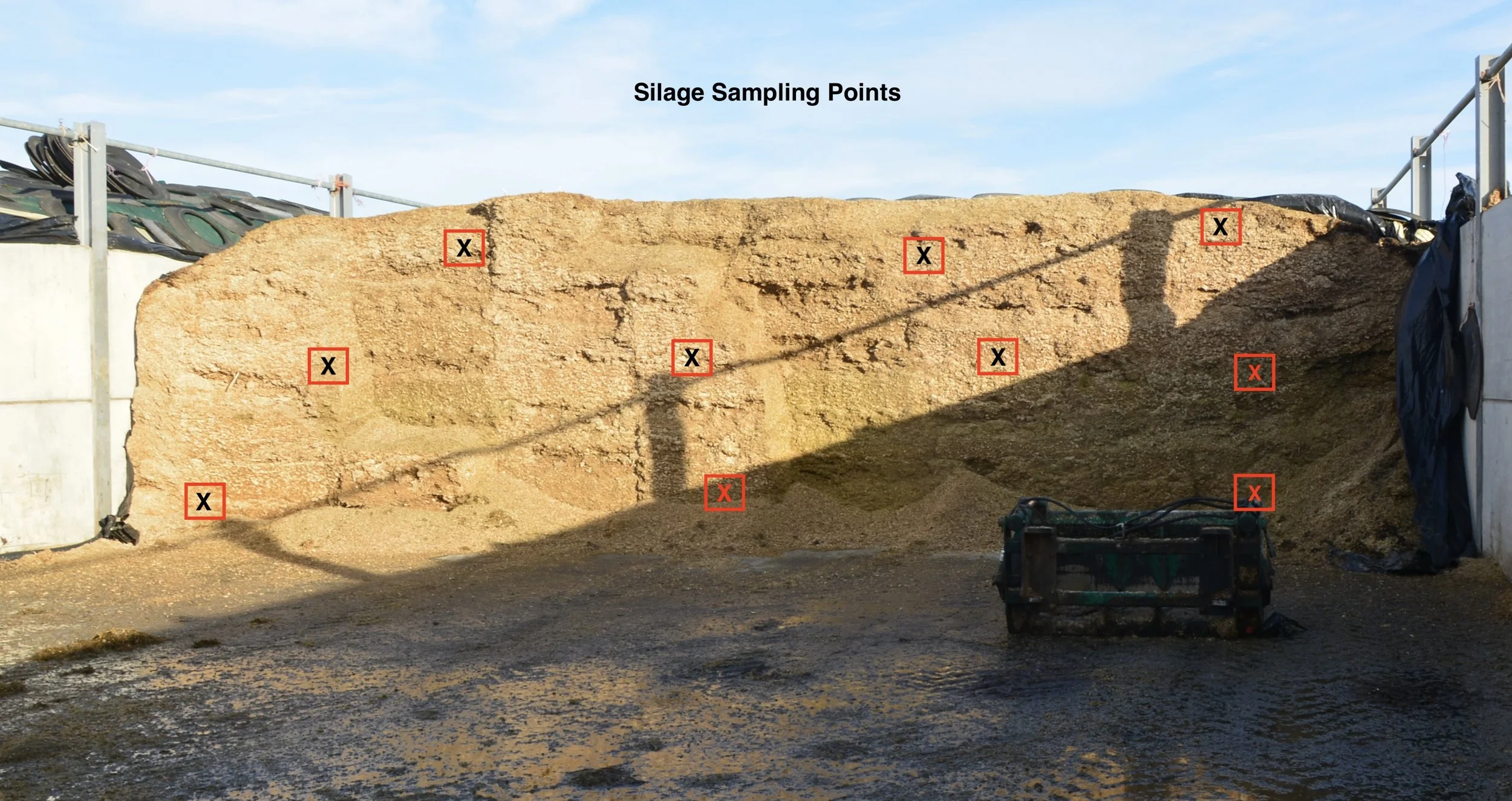
Make a plan of where to take samples
Some people advise you to avoid “poor” areas as these unfairly impact the results and whilst that’s true I also believe that if the cows are going to eat it, then it should be sampled. Obviously areas that you wouldn’t feed, or silage that will be left on the side of the plate should be left out of the sample. I try to add a representative proportion of each bit of silage so if the bottom is really wet and it’s around 20% of the clamp face, then I try to get 20% of the sample from here.
Where to take the silage sample
It is no good taking a silage sample from the exposed face of the silage because its been exposed to the air and has therefore suffered some aerobic losses. You need to dig deep to get a “fresh” sample. I try to sample when the silage is being extracted to feed out so that you can take a sample from behind each bite.
If you are sampling silage before it’s to be fed then you need to use a silage sampling spear or corer. This will enable you to dig deep for accuracy! A spear is always the best way to take a representative sample. A short one will enable you to take good samples from the face; you need to going around 400mm (18 inches) deep ideally. If you are sampling the unopened clamp then you need a lance long enough to get through the entire depth of the clamp so you can sample silage near the floor.
How to mix a silage sample
So now you have a representative silage sample but the lab only wants 500 grams (or just over a pound in old money) so how do you select what to send? You need a really clean surface, so a fresh bit of plastic sheet is ideal if the kitchen table is out of bounds. Mix all the samples together and keep halving the sample until you get down to around the half a kilo sample needed. Now you can start stuffing it into a sealable plastic bag.
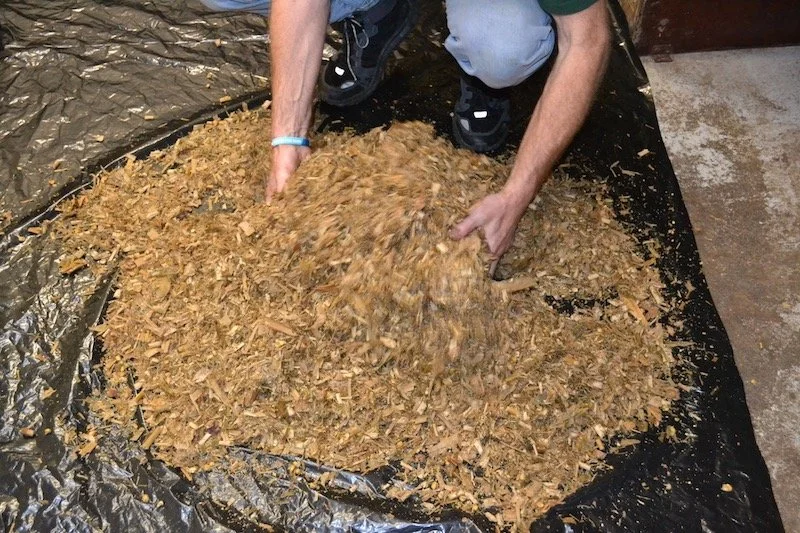
How to get the silage sample to the laboratory
It’s now all about keeping in the freshness - or more importantly, keeping out the oxygen. I always used to squeeze out as much air as possible and seal the bag quickly. For good measure I then always put this into another sealable bag to try and protect it in transit. Obviously labelling is really important - I probably should (would) have done this before I even took a sample. Put down as much information as possible, such as cutting date, crop species, additive used etcetera.
Now speed is vital, so putting the bags into a cool box with ice packs inside is good practice. Make sure the silage doesn’t come into contact with the ice packs because you don’t want to freeze it but you do want to cool it. In most cases samples are then posted to the laboratory, but if possible, I would arrange to deliver them in person. I have seen parcels of silage stacked up in warm offices waiting to go through to the lab so to avoid this, I speak to the lab staff and find out what time they start to analyse the samples. I would then turn up with my cool box and hand the sample over in person.
What happens at a silage analysis lab?
This bit is just about as important as the sampling because your silage is still a living ecosystem that will react to the conditions it is exposed to. That’s why I used to go to all the trouble of delivering sample “just in time”, to try and avoid a sample being spoiled once it’s out of your sight. But that was then, and this is now, because now we have affordable vacuum packing machines.
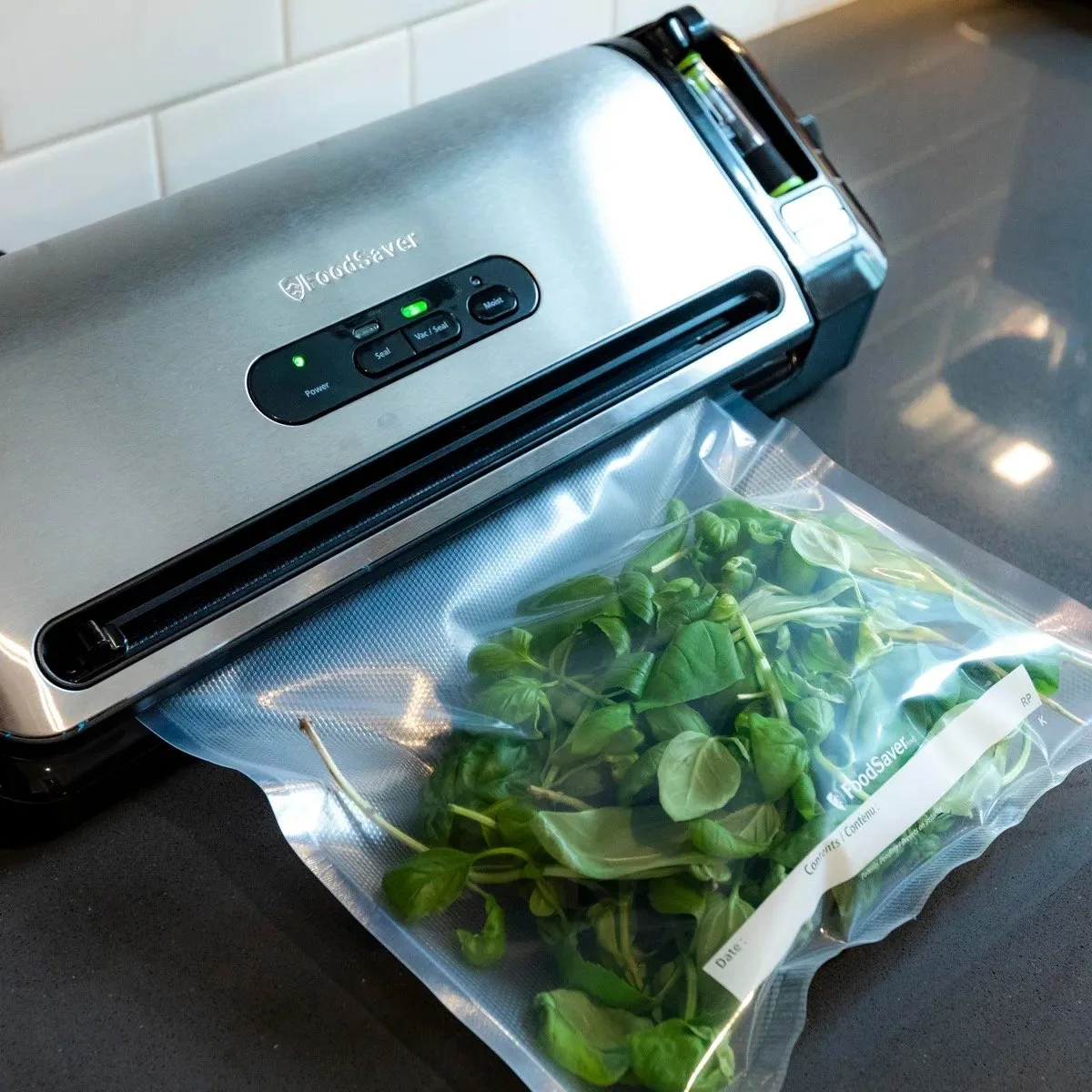
OK so its not silage but you get the idea?
Vac packing is the future of silage sampling because it stabilises the silage conditions by eliminating all that damaging oxygen. And whilst it was always the gold standard, it no longer comes with a gold plated price tag. A “good enough” machine can be yours for less than £30 from that internet thingy. Taking the air out makes sending silage samples so much easier; it doesn’t matter if the sample arrives on a Friday and sits there over the weekend once it’s vacuum sealed.
The ability to safely send silage off and get reliable, representative results that you can trust also means that on farm testing is less attractive. As I have explored before, the accuracy of silage testing depends on the reference data that is used and lab based systems are more likely to be “up to date” in this respect. So my advice is to buy yourself a vacuum sealing machine, find a FAA Group laboratory and get some samples in the post. But then again this is farming, so everyone has their own opinion.
If you want to discuss sampling and analysing your silage or would like to discuss any other aspects covered in this series, contact me at jeremy@silageconsultant.co.uk