Are NIR sensors accurate for silage analysis?
This article is not my legal defence, well it’s not meant to be anyway, because I have been accused of something and that started me thinking. When I say accused, let’s be clear, not in a legal manner so there should be no need for metal files wrapped in silage samples! No, it was more a observation made to me during a recent meeting with a nameless farmer who pointed out that I seem to be very keen on NIR sensors. It was this that made me start to think; because I have to admit it, in the past I have been very positive about silage analysis made with NIR sensors but is this justified, are NIR sensors really accurate and useful tools or are we being hoodwinked by marketing and hype?
Why should you use an NIR sensor on your silage?
There are loads of farmers and AD plant managers that don’t use any of this stuff, after all we have been making and feeding silage long before any of this technology was invented. So why should you bother with it?
Well I guess it’s the erosion of margins that’s the real driver because the days of “easy money” in farming seem to be long gone. If you want to survive, you need to pay attention to the details and the data. And even if you don’t currently record or measure any of the parameters that a NIR sensor can provide, chances are you might be in the near future.
What is a NIR sensor and how does it work?
NIR stands for Near Infa-Red because these boxes read and understand the language of light. We can only see a fairly narrow band of light (380nm to 750nm) but NIR sensors work with red light that’s just outside of our visible window - at 700nm to just over 2000nm in wavelength. Different materials absorb different wavelengths of light so the light that bounces or refracts off something gives it its “colour”. And this is the process that a NIR sensor uses to “read” your silage; it shines some light at the forage and then analyses the light that comes back from it.
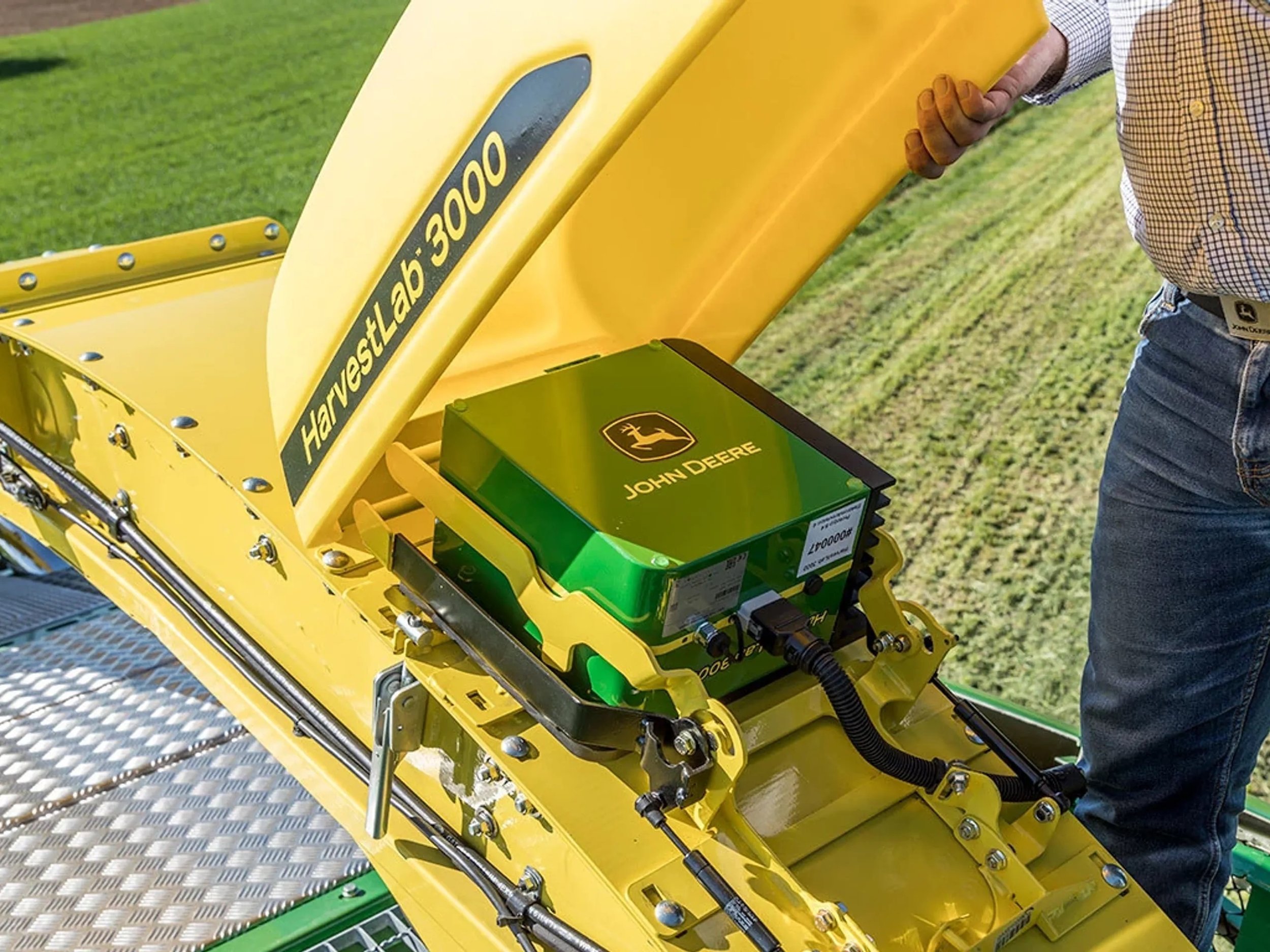
The technology was developed in the 1970’s and it’s pretty basic in operation but it still took until 2007 for it to be commercially available on your forage harvester. So why the long delay, why did it take so long to become available, let alone popular?
It’s all about the map?
John Deere were pioneers of change in farm technology and they were keen to drive us to GPS guidance, field mapping and yield mapping. Now yield maps from combines are pretty basic and simple because the combine holds onto the crop before dumping it into the trailer But for silage its a bit more complex and that’s were the NIR HarvestLab came in.
Whilst that might be interesting, this is not the map I am interested in at this point; I am interested in the reference map. The reference map is deep within the NIR sensor software bundle and it’s what the CPU uses to decipher the silage. The map is the critical bit because so far, all the NIR has is a recording of lots of different light samples, it needs to know what these mean. Now for some compounds it’s possible to refer to standard data - for instance we know that water absorbs light wavelengths of 760nm, 970nm, 1200nm, 1450nm and 1940nm but were are dealing with much more complex stuff with raw silage.
This is exactly the problem that the reference map attempts to solve. In really simplistic terms it answers the question “what does 30% dry matter rye grass look like at 12.5ME”. So you tell the computer what the sensor is going to look at and then the sensor sends all its reading to the CPU who cross references this with the map and comes up with the “analysis”.
Is a silage NIR sensor accurate?
So that lot sounds complicated and there seems to be loads of room for errors, so it this stuff trustworthy and just how accurate is it? Firstly we need to consider the sensor side and we can say that this bit is extremely accurate, I mean bonkersly accurate, but that doesn’t mean the whole system is accurate. This is because it is all down to the map - again - because if the map isn’t accurate, then the data you get out on the screen, or print out, will be rubbish irrespective of how accurate the reading going in are. So how do you make sure that map is accurate in the first place?
As far as an on harvester sensor is concerned, there isn’t much you can do because the boxes are sealed. One thing you can - and must - do is to make sure its software is updated as often as possible. These updates will be loading the latest maps so that you have the best reference possible. If the performance of the NIR sensor is important to you, or your customers, make sure you ask how, when and how often these updates will arrive on your machine before you purchase it.
If this map is so important, who makes it?
Now we’re getting to the nub of the whole thing, where are these maps coming from? If you are a huge multinational manufacturer you will have your own labs and sources but these are not the only people using NIR sensors. If you or your feeding consultants are sending your silage off to a laboratory for analysis, the chances are it will be analysis with a NIR sensor just like the ones on your contractors forage harvester. The difference between an analysis in a lab and on a chopper is not the sensor, it’s the map it references the results against and the guys at the lab, if they are any good, won’t be taking any chances on this bit.
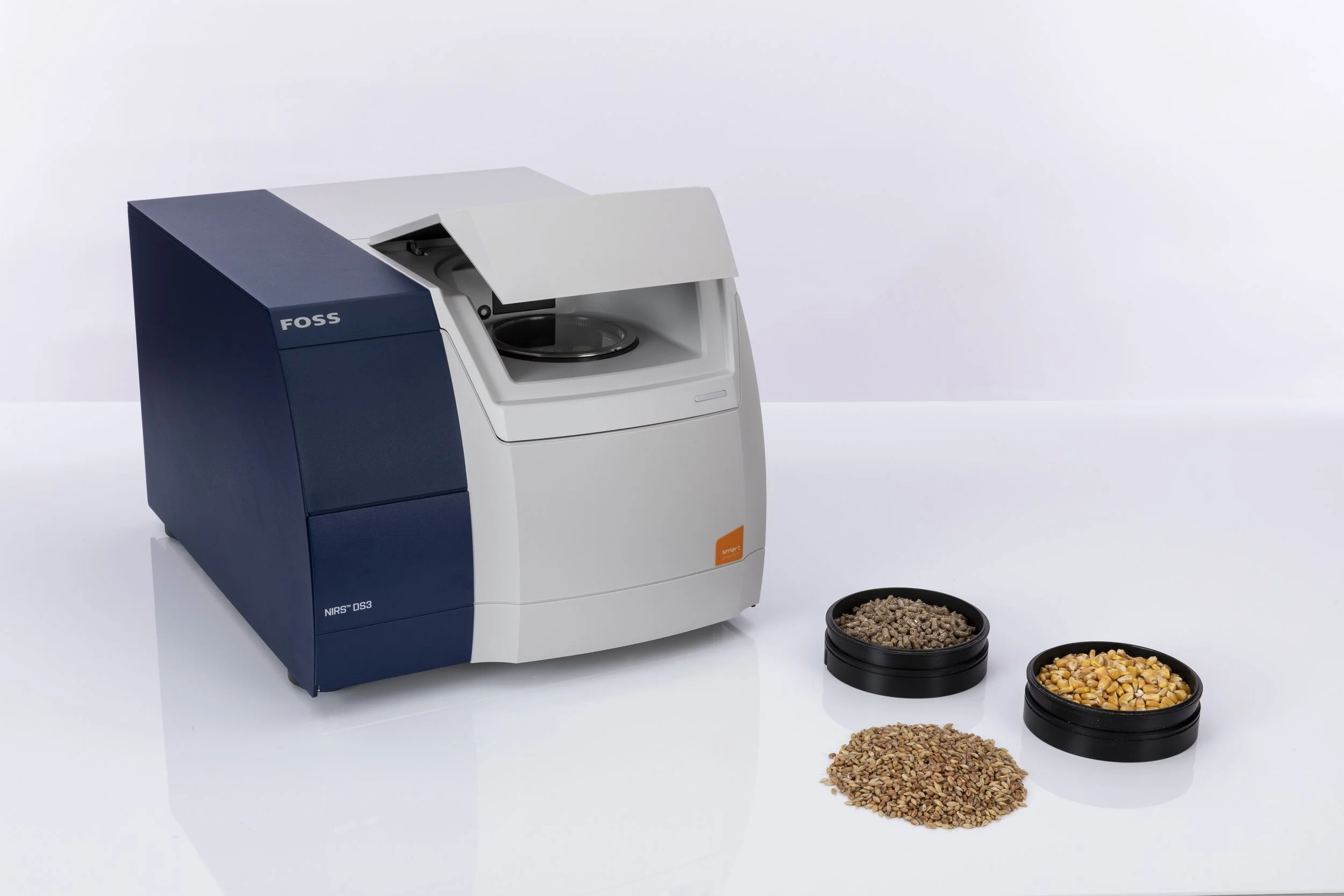
Laboratory silage analysis with Foss NIR equipment
By checking against an alternative analysis, the lab can “confirm” its NIR readings. They do this by doing a “wet chemistry” analysis just like the good old days in a chemistry lesson, all bunson burners and test tubes again. So why doesn’t the laboratory do all its analysis as wet chemistry if this is the benchmark?
For once, it’s not just a cost saving exercise, because whilst it is more expensive to do wet chemistry, it’s also much much slower. And that’s really important because forage and silage are a live culture that is constantly changing and degrading in the atmosphere. So a long slow analysis will give you an accurate but unrepresentative result that’s not true to the forage you’re feeding.
The very best of laboratories will be using a pool of data to tweak the NIR data map. The Forage Analysis Assurance Group (FAA) is a group of labs that do just this. They collect and share masses of data so that you have the most accurate analysis possible - and no I’m not linked in any way to them. I believe this is the very best way to make allowances for all the variations such as crop variety, seasonal conditions, growth stage etcetera when it comes to analysing your silage.
So is it worth sending silage samples to a lab?
Assuming you are going to use the data from an analysis to either formulate a diet or to change how you’re making and storing silage, then should the sample go to the lab or can it be tested on farm? Well as I stated earlier, if it’s a proper NIR sensor, then machines will be very similar in the lab or on farm, but the big difference is between the maps used in the software. If the reference data isn’t up to date and accurate, then the analysis you get won’t be worth the paper its written on.
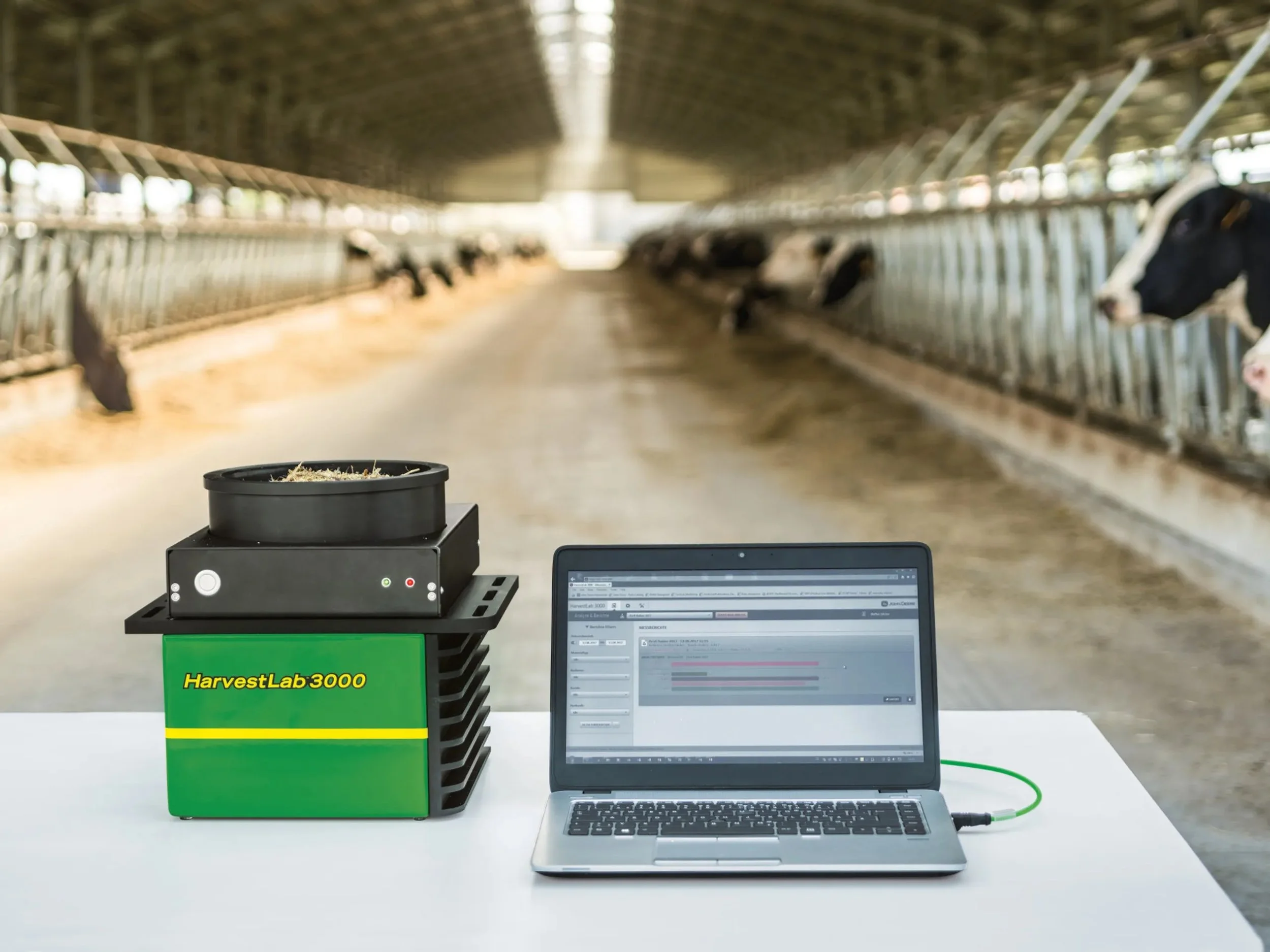
Stand alone use of HarvestLab
Oh and one last thing, don’t think you can just lift the HarvestLab off the forager and push some silage over the lens. The maps within the HarvestLab are for fresh forage not fermented silage and they are very different. John Deere do offer a package to enable the sensor to read fermented silage but remember that the important bit is that reference map. So maybe you have decided that the lab is a better option, so how should you send a sample off to be analysed? Well that’s a whole load of stuff for another day!
If you want to discuss analysis of your silage or would like to discuss any other aspects covered in this series, contact me at jeremy@silageconsultant.co.uk