Silage Fermentation - what’s going on under the sheets?
A point of clarity before I get into this subject, this is NOT designed as an educational article for students, and it’s not about what students get up to under the sheets either. Yes it is all about what happens during the fermentation of silage, but the aim here is to explain why these processes are so important down the line. The processes that get started as soon as the silage is formed have a massive effect on how that silage will behave when you come to use it. And in this piece I want to explore this relationship and what impact it can have on your business’s financial performance.

No not those sheets…. - photo by Mynie Botha
What’s happening under that silage sheet?
There is a huge number of processes that go on to form a fermentation and some of this starts even before your forage is wrapped or sheeted. The key processes are all involving microbial activity and to fully appreciate the scale of this you need to get some sort of understanding of the numbers. It’s often quoted that a teaspoonful of soil can contain around a billion individual microbes and maybe 10,000 different species. And although soil is a complex and rich environment where microbes can thrive, so too is your fresh forage.
The factors that makes grass, clover and maize such great feed stocks for animals and AD plants also makes them a great feed source for thousands of different microbes. Nature and evolution puts a barrier in the way to protect the plants from this microbial onslaught and whilst they are growing they are generally safe from the hungry little guys.
Why is it important to chop silage?
The plant cell walls and waxy outer layers act as both physical and biological barriers to microbes. These barriers safely lock up all those sugars and proteins within the plant, so in order to naturally ferment the crop into a silage, we cut, condition and chop the plant matter into tiny pieces. This action breaches those natural barriers and once the crop is chopped up, the microbes all have free access to the nutrients. This means that the processes that we call fermentation start as soon as the forage hits the trailer or baler. And this process has several distinct stages.
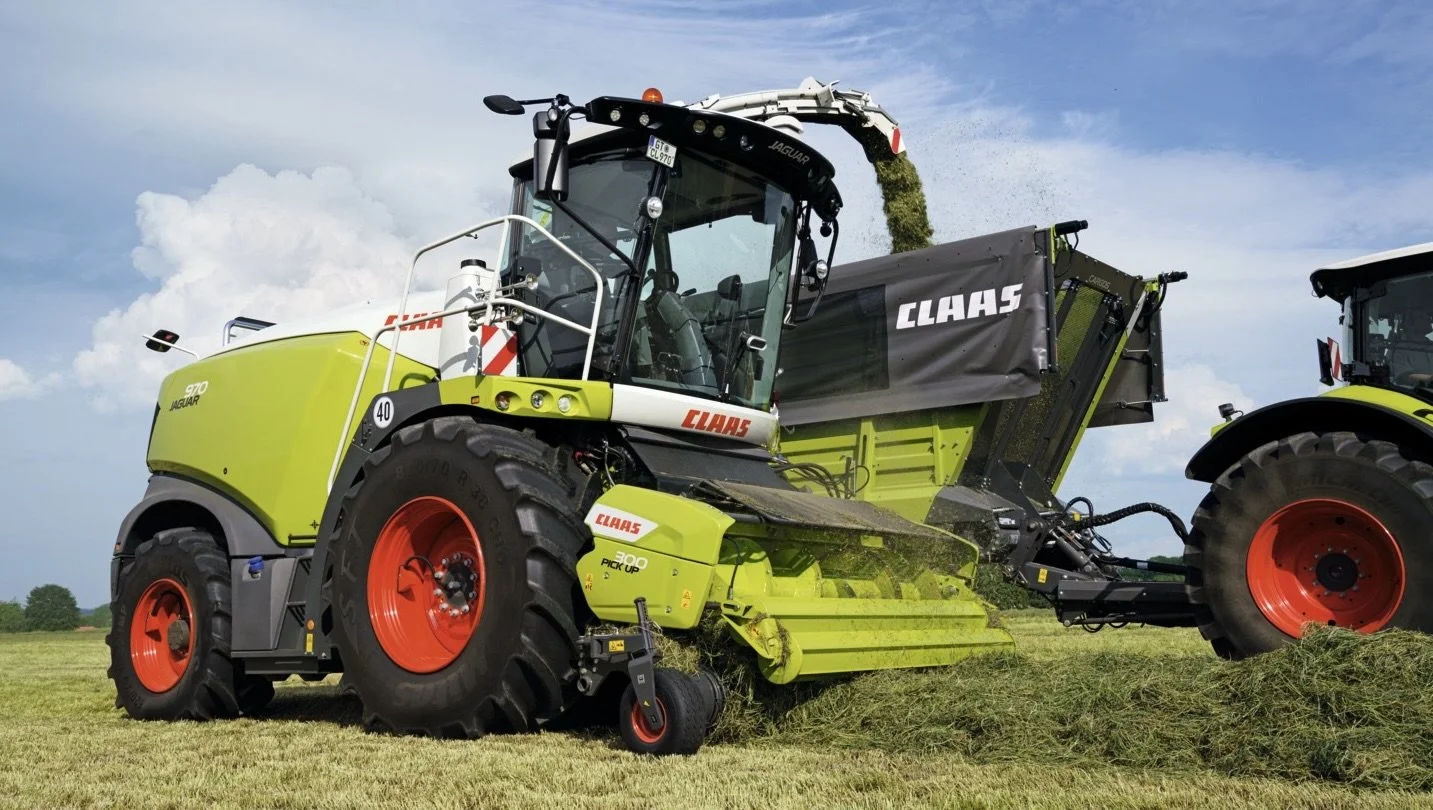
Chopping silage to aid fermentation - CLAAS Jaguar 970
Stage one of silage fermentation
The first stage of fermentation is usually referred to as the aerobic phase. This is because the dominant microbes at this stage are aerobic ones; bacteria, yeasts and molds that require oxygen to function. To be clear, it is not ONLY aerobic organisms that are active during this phase, because just about all microbes in the silage environment will be active. The aerobic guys are mostly dominant because oxygen is such a reactive element and any life forms that use it are inevitably just more “on it” than the sloth like anaerobic chaps.
I often use the party analogy to describe this stage of fermentation. The silage is an “all you can eat and drink party” that you have provided for all comers. The aerobic guys are the young teenagers, they dash in and stuff their faces, drink some cider and soon pass out. The anaerobic heavy weights are the party hardcore drinkers who are still going strong at 4am.
So the teenagers (or aerobic microbes) are consuming the sugars and the oxygen and in the process they are producing some weak organic acids, quite a bit of ethanol, loads of carbon dioxide and heat. They are also reproducing like there is no tomorrow, but then, so are all the other microbes - at there own rate. These aerobic guys days in the sun are numbered though because as long as the silage is sealed, eventually the oxygen will be all gone and the CO2 levels will be too high to allow the aerobic microbes to remain active.
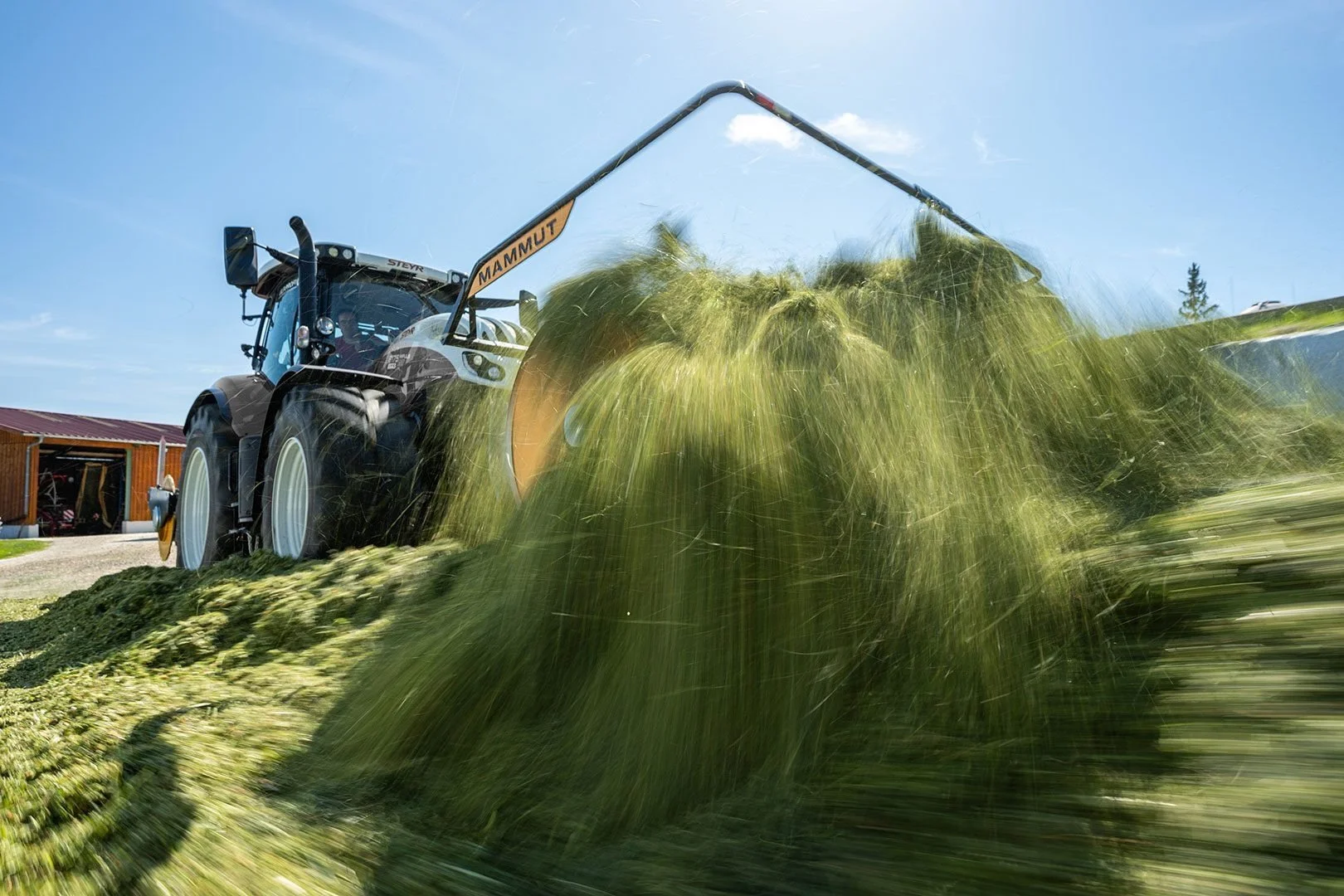
Spreading forage to make better silage - Mammut Silo Fox
Silage fermentation stage two
When there is almost no oxygen left, the anaerobic guys will become the dominant microbes. These microbes are still consuming the sugars and carbohydrates in the silage, but they are doing so at a slower rate. They feast and reproduce like they’re living the last days of the Roman Empire and their numbers rapidly escalate. The by product of this lifestyle is lactic acid (v good) in most cases and this causes the pH in the clamp to rapidly reduce. Now there are other things going on too such as populations converting lactic acid into acetic acids (goodish) and maybe even concerting it into butyric acids (v bad) as well as some buffering of pH changes that involve acidic conversions but this is not the time or place to go into this process. These conversions use up valuable energy and don’t always have desirable outcomes, but that’s a different story for another day.
The key point here is that the pH will continue to drop and as it does so, most of the microbes will find that conditions are no longer to their liking. Below around pH 5.0, (generally) only the lactic acid producing bacteria can function and by around pH4.0 - 4.5 even their activity will cease and the silage can be described as stable.
Silage stability
Stability doesn’t mean that nothing is going on. As I have explored elsewhere, silage does change over time and there are changes in the digestibility and to the proteins within the crop. But assuming the silage is sealed, the remaining nutrients will be safely preserved.
The feed out phase
When you get to feed or use the silage you will inevitably open it up to the oxygen again. I’m sure you’re well aware that this is the point where the silage is at risk of aerobic instability as aerobic microbes can start wasting your silage into ethanol, heat and CO2 again. But importantly this isn’t the whole point of this article because this is the point when any mistakes that were made at ensiling, will come back to hit you in the bank account.
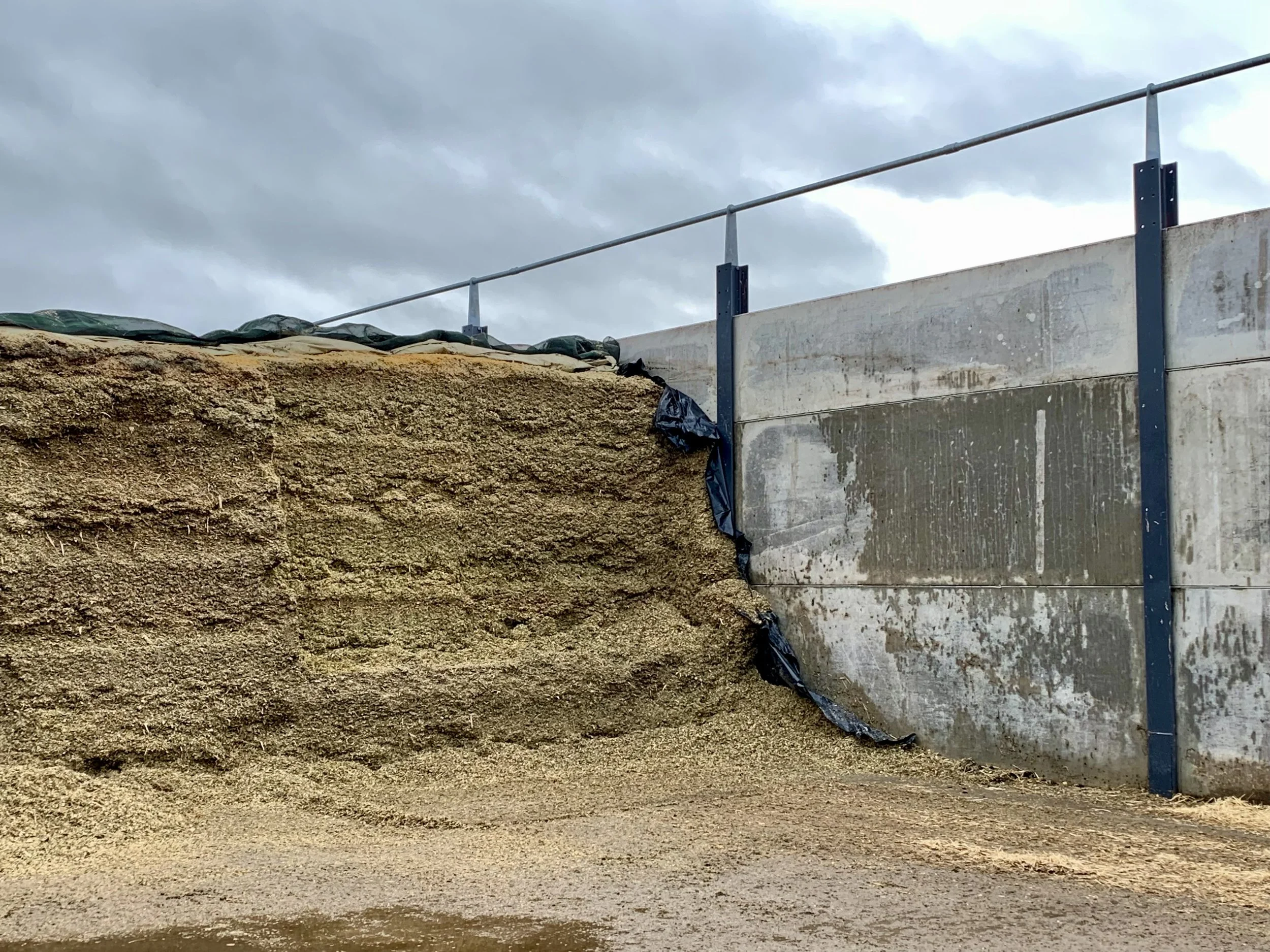
The proof of the pudding is in the eating - or so they say
You see aerobic microbes are not like aerobic mammals. In the absence of oxygen we, just like all mammals, will expire after a few minutes; well maybe not the breath holding whales and dolphins, but you get the idea. In contrast, aerobic microbes don’t die in the silage clamp, they just hang around and wait for better times. And they can wait for a long time in some very low pH conditions. So, it’s important to remember that low pH doesn’t kill these guys off. To keep silage stable once its opened up you need to have done the silage making job well.
Why a fast fermentation is important in making good silage
Speed is so important in making your silage stable once its open to the atmosphere because the quicker you can get to stage two, anaerobic conditions, the less aerobic microbes you will have there once the silage is open. So this is why I constantly bang on about consolidation and getting the air out of the clamp during filling. This is also why I urge you to sheet the silage as soon as possible, and it’s why scientists search for ever faster acting bacterial inoculants to speed up the fermentation. And it also explains why what’s happening at the start of the fermentation process is so important when you come to using the silage.
If you want to discuss your silage fermentation or would like to discuss any other aspects covered in this series, contact me at jeremy@silageconsultant.co.uk